Short yoga for your back before work
Six gentle shapes, twelve minutes, done before the laptop opens.
There is a soft hour between the kettle boiling and the inbox opening. I have learned to live in that hour, and to plan my day out of it.
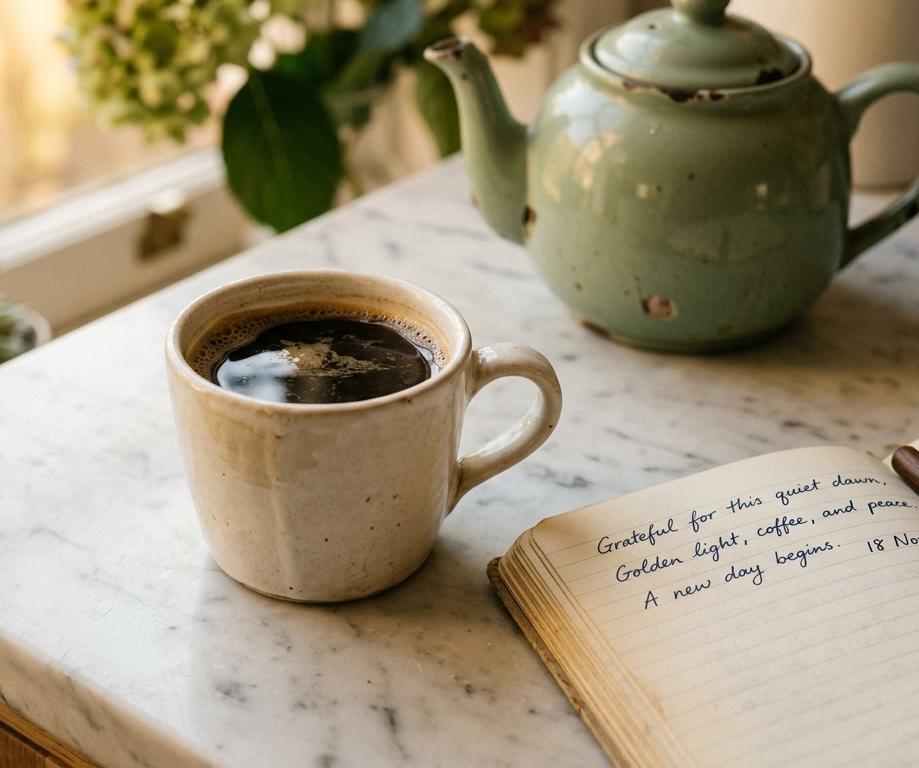
For two and a half years I have kept the same simple rule: before any screen, before any reply, a glass of water and a slow cup of coffee. The morning is mine. The day starts after.
I used to plan by panic. The first ten minutes of every day were spent scrolling messages, scanning calendars, and quietly absorbing the requests of other people before I ever asked what I wanted from my own hours. By 8:30 a.m. my day was already someone else’s. I would arrive at my desk feeling tired of a morning I had not actually lived yet.
The change was not dramatic. I did not buy a leather-bound planner. I did not wake at 5 a.m. I simply made a small agreement with myself: the coffee deserves attention. While it steams, I write three lines in a notebook. Three lines, every morning. That is the entire system.
When the mind opens to other people’s noise first, it spends the day reacting. When it opens to its own voice first, it spends the day choosing. The order of these two openings is not romantic, it is practical. Research from the Harvard Business Review consistently points to the value of “intention-first” mornings — beginning with a short act of reflection before consuming external information — as a way of protecting cognitive bandwidth.
WHO specialists, in their commentary on workplace well-being, also note that small daily rituals are among the most protective behaviours for mental balance. Not exotic ones. Familiar ones, performed consistently. A coffee, a notebook, a window. That is a ritual.
“The first hour is the hour that teaches all the other hours how to behave.”— a note pinned to my fridge for two years
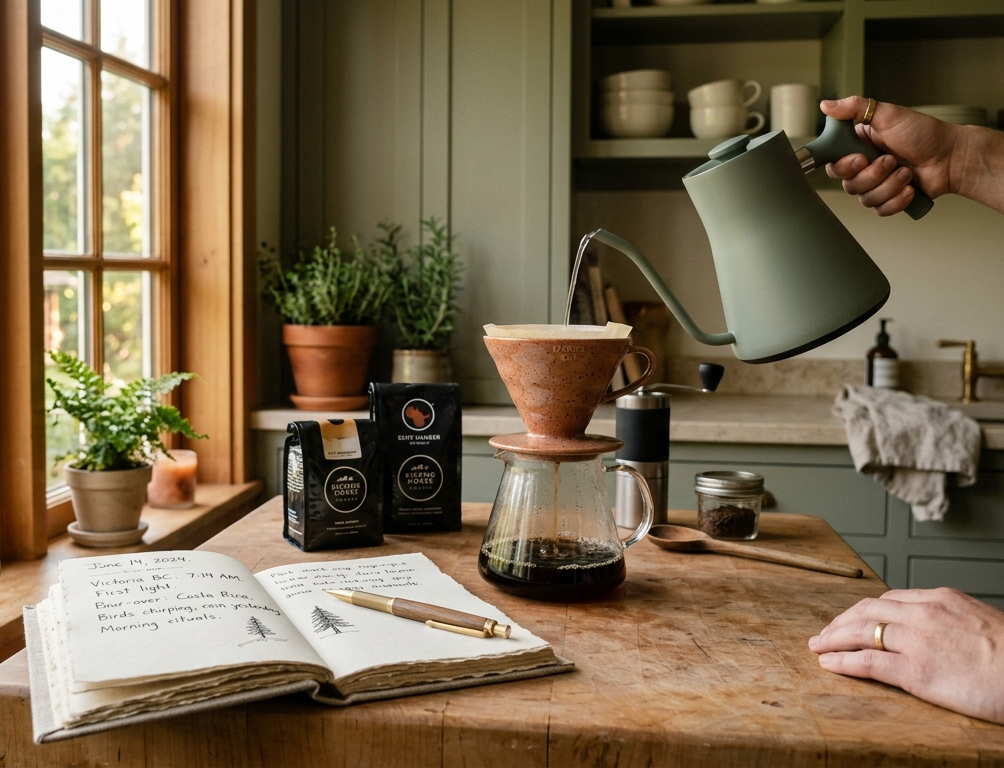
While the coffee brews — and I do brew slowly, with a small ceramic dripper that requires me to stand still — I open a soft cotton notebook and write three things. Always three. Never more.
It takes about three minutes. Often less than the coffee itself.
The hardest part was not the writing. It was the patience to let the coffee be the activity and not a fuel-up between two real things. For a long time I would set the kettle, run upstairs to “just check” something, run back down, and discover that the moment had already left. I had to learn to stand in the kitchen.
Tomorrow, try only the first line — “one thing I want to feel today.” Carry that single word like a small stone in your pocket. Notice, by evening, whether the day matched it. Most days it will surprise you.
I will not claim that three notebook lines have changed my life. I am suspicious of large claims about small habits. But I can say this: I no longer arrive at my desk tired of a morning I have not lived. I arrive with three sentences that belong to me. The rest of the day can be loud — most days it is — but the morning has stayed quiet, and that is the part I needed.
If you are looking for somewhere to begin, begin smaller than this. Begin with the glass of water before the coffee. Begin with standing in the kitchen for one minute, doing nothing, while it brews. The journal can come later. The habits will arrange themselves.
Then ten minutes is the practice. Skip the third line. Keep the first. Even one sentence — “I want to feel steady today” — is enough to set a tone.
The drink is not the point. The pause is the point. Tea, hot water with lemon, or a slow first glass of plain water all work. Choose the one that asks you to stand still.
Put the notebook on top of the kettle. Literally. The object you cannot avoid becomes the cue.
Neither, really. It is closer to listening. You are letting the day announce itself before you fill it with tasks.
Six gentle shapes, twelve minutes, done before the laptop opens.
What a small ceramic teapot has taught me about waiting.
The smallest, kindest movement practice I keep returning to.
Trainpulse is a slow, independent journal about morning habits and the rituals that quietly shape a week. Written from a Canadian kitchen, read in front of one too. No advice from doctors here — just careful, personal notes from people who have practised these habits for a while.
A short, calm note every other Friday — journal entries, slow rituals, and one quiet idea you can try this weekend.